
When an overdraft was once a safety net and is now the only way you can cover wages, rent or suppliers, it stops feeling like a tool and starts feeling like a trap. Add in messages from the bank, pressure from HMRC and calls from worried creditors, and it can be hard to see a calm way out.
This guide explains what happens to a business overdraft in liquidation, specifically in a Creditors’ Voluntary Liquidation (CVL). You will see how the overdraft debt is treated, what that means for you personally, and how we work with you to move from crisis to an orderly, regulated closure.
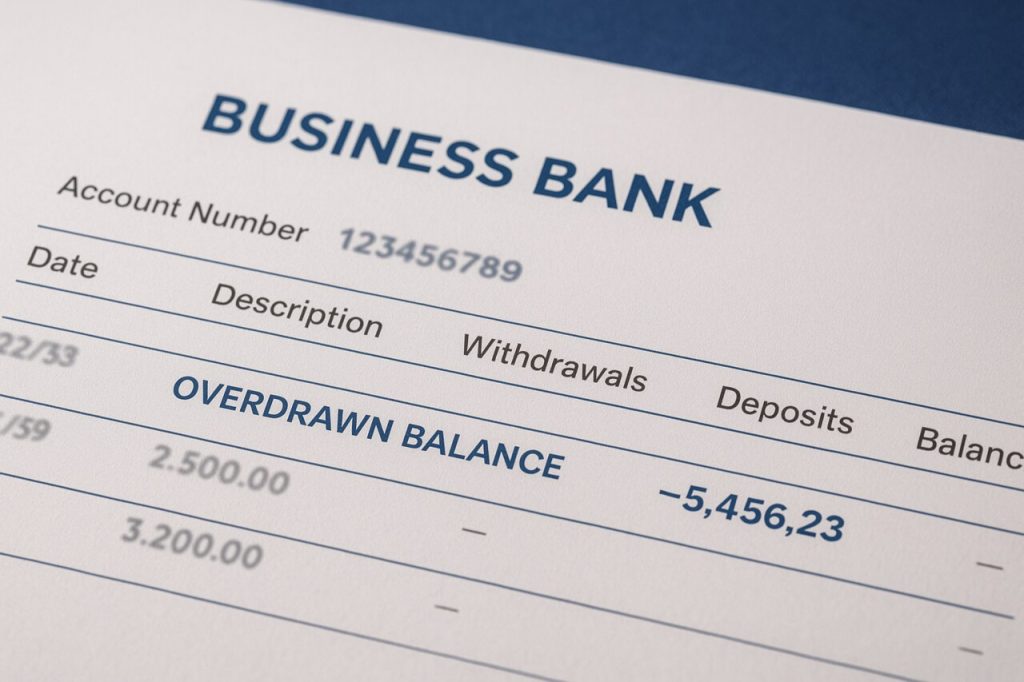

When Your Business Overdraft Becomes a Warning Sign
A business overdraft is often set up as short-term working capital. It is there so that timing differences between paying suppliers and getting paid by customers do not cause problems.
Over time, that can change. Common patterns include:
The overdraft sitting at or near the limit most of the time.
Repeated increases in the limit just to get through the next few months.
Using the overdraft to pay VAT, PAYE or corporation tax.
Relying on it every month to meet payroll.
Across the market, use of overdrafts and other external finance has been rising. British Business Bank data shows the proportion of smaller businesses using external finance rose from 41% in early 2023 to 50% later that year, with overdraft use climbing as cash flow pressures increased.
On its own, using an overdraft is not a problem. It becomes a warning sign when it is the only way the business can survive, when there is no realistic path to reducing the balance, and when you are worried that the bank may cut the facility.
If your business overdraft has been withdrawn or the bank is signalling that it may be reduced or removed, that is often the point at which it makes sense to talk about formal options such as liquidation.
How a Business Overdraft Works in Practice
A business overdraft is a credit facility attached to your current account. The bank agrees a limit and you can draw up to that limit as needed. Interest and charges are usually calculated daily and applied monthly. Many banks can demand repayment at any time, which is why overdrafts are described as “repayable on demand”.
Key features that often apply:
Security over assets – for example, a debenture over all present and future assets, or fixed charges over specific assets.
Personal guarantees – one or more directors agree that if the company cannot repay, they will be personally responsible for some or all of the balance.
Bank set off – the bank may be able to use money from one account to reduce what is owed on another account held with them.
Research based on the SME Finance Monitor shows that overdrafts are still a common source of working capital, especially among employer businesses with 10 to 49 staff, where around one in five use a bank overdraft.
None of this is a problem when trade is healthy and the overdraft goes up and down. When it becomes a permanent fixture that only moves in one direction, it is often a sign that the company may be insolvent.
Sectors We Support
We support company directors in every sector, from construction firms and logistics companies to pubs, cafés, restaurants, hotels, retailers and manufacturers. Our advice is always clear, confidential and shaped by real experience in your industry. Whether you’re dealing with unpaid tax, supplier pressure or falling income, our team understands the challenges and will guide you through the best next steps.

Signs the Overdraft Points to Insolvency
A company is usually considered insolvent if:
It cannot pay its debts as they fall due (cash flow insolvency).
Or its liabilities are greater than its assets (balance sheet insolvency).
An overdraft on its own does not mean insolvency, but patterns like these often go hand in hand with it:
The overdraft is needed every month just to meet wages and essential suppliers.
Payments to HMRC are delayed again and again.
Direct debits are being returned and bank charges are mounting.
The overdraft limit has been increased several times and is still always at the top.
The bank is asking for updated information, additional security or reduced drawings.
Nationally, the use of credit cards and overdrafts is increasingly being driven by pressure on business cash flow, not by long-term investment.
If you recognise these signs, there is a real risk that the company is already insolvent. At that point your legal duty shifts. You are expected to put creditors’ interests first and to avoid making the position worse for them. Continuing to trade while knowing that there is no reasonable prospect of avoiding insolvent liquidation can create personal risks, which we cover later in this guide.
What Is a CVL and When Is It Appropriate?
A Creditors’ Voluntary Liquidation is a formal process to close an insolvent limited company. It is started by the directors and shareholders, not by the court. A licensed insolvency practitioner is appointed as liquidator to take control, realise assets and distribute funds to creditors in a set legal order.
A CVL:
- Brings trading to an end.
- Stops most creditor action against the company.
- Allows the overdraft and other debts to be dealt with inside a regulated process.
- Ensures that the directors’ conduct is reviewed in a structured, transparent way.
If your overdraft use is increasing, HMRC is pressing for payment and creditors are threatening legal action, you may already be at the point when to consider a CVL rather than trying to trade on.
Put simply, a CVL is a form of voluntary liquidation that allows you to take control of the timing and appoint an insolvency practitioner of your choice, rather than waiting for a creditor to force your hand.
If you do decide that liquidation is the right way forward, you will want to understand how the CVL process works, from first advice call through to company dissolution. Get in touch with Anderson Brookes by calling 0800 1804 935 or emailing advice@andersonbrookes.co.uk today.
What Happens to a Business Overdraft in a CVL?
This is the core question. When a company with an overdraft goes into CVL, several things happen.
The position on the day of liquidation
On the day the liquidator is formally appointed:
The company’s bank accounts are normally frozen.
Any overdraft balance is fixed as at that date.
The bank becomes a creditor in the liquidation for that balance (subject to any security it holds).
The liquidator will list the overdraft as one of the company’s debts and ask the bank to submit a proof of debt.
If there is money in the current account, the bank may exercise its right of set off and use that balance to reduce the overdraft before liquidation, or immediately once they are notified of the intention to liquidate. This can be a shock if you were expecting those funds to cover wages or essential bills.
In liquidation, creditors of the company are paid in a strict legal order that is set out in the Insolvency Act and related rules. Guidance from firms specialising in insolvency confirms that this order must be followed and that unsecured creditors (which can include the bank if it has no effective security) are paid last.
Where the overdraft sits in the order of creditors
How the overdraft is treated depends on whether the bank has security.
If the overdraft is secured by a debenture or fixed and floating charges, the bank is usually a secured creditor. It can expect to be paid, at least in part, from the sale of assets covered by its security, before unsecured creditors receive anything.
If it is unsecured, the bank ranks alongside other unsecured creditors such as trade suppliers, HMRC (for non-preferential elements) and landlords.
Recent analysis for the Insolvency Service found that in 86 percent of completed CVLs in the sample, unsecured creditors received no payment, and the median return to unsecured creditors was zero percent.
This helps explain why banks often insist on security and personal guarantees for overdraft facilities. From the company’s point of view, it also highlights why dealing with personal exposure early is so important.
Interest and charges after liquidation
Once the company is in liquidation:
Interest and charges on the company’s overdraft usually stop, as the balance is fixed at the date of liquidation for the purposes of creditor claims.
If there is a personal guarantee attached to the overdraft, interest might continue to accrue under the terms of that guarantee in relation to you personally.
Enforcement action by the bank against the company should stop and they will normally deal with the liquidator rather than the directors directly. This removes a lot of day to day pressure, even though the underlying debt has not disappeared.
Closing a Limited Company with Debts?
Fast and Stress-Free Solutions.
Start closing your limited company today. Placed into liquidation within 8 days. We fully understand that timing is critical.
Worried about your Bounce Back Loan?
Need to close your limited company? Speak to an expert who’s helped thousands do the same – even with company debts or creditor pressure.
Stop Creditor Pressure
Getting constant calls from creditors? Closing your company through liquidation can give you the relief to move forward.
Directors: Avoid Risks When Winding Up Your Company
We guide you, simply, honestly. Let us handle everything.
Common Overdraft Scenarios in Liquidation
No two cases are exactly the same, but some patterns appear again and again.
Unsecured business overdraft
If the overdraft is completely unsecured and there is no personal guarantee:
The bank is an unsecured creditor.
It submits a claim in the CVL for the balance plus any contractual interest up to the date of liquidation.
It is then repaid in line with any other unsecured creditor, which may be nothing or only a small percentage.
In many CVLs there is little or nothing left for unsecured creditors once assets have been realised and costs and preferential debts have been paid.
Secured overdraft
If the overdraft is secured by a debenture or specific charges:
The bank may appoint its own receiver in some situations, but more usually will work with the liquidator.
It will be repaid from the sale of the assets covered by its security, after the costs of realising those assets and any prior ranking claims.
Any shortfall (where sale proceeds do not clear the overdraft) may fall into the unsecured pool or be claimed under personal guarantees.
Overdraft with a personal guarantee
Many business overdrafts are now backed by a director’s personal guarantee. A personal guarantee is an agreement where you, as an individual, promise to repay the company’s borrowing if it cannot, and if the company enters liquidation the lender can pursue you for the shortfall.
In liquidation, the sequence is often:
The company ceases trading and the liquidator is appointed.
The bank works with the liquidator to establish what can be recovered from company assets and any security.
If there is still a shortfall, the bank considers whether to call on the guarantee.
We explore what that means for you in more detail in the next section.
Mixed facilities and sweep arrangements
It is common for an overdraft to sit alongside other facilities such as loans, asset finance or invoice discounting. Facilities may share security and guarantees.
Banks also often have “sweep” or “set off” arrangements that allow them to move money between accounts automatically. If your overdraft is maxed out, sudden sweeps of funds can make meeting other commitments impossible, and are often a trigger for seeking advice about liquidation.
Personal Guarantees and Your Position
Many directors are most worried about their personal position, not just the company’s debts.
A personal guarantee:
Is a binding legal agreement between you and the lender.
Sits outside the limited company structure.
Means that if the company defaults or goes into liquidation, the lender can ask you to pay personally.
If the overdraft is called and the company cannot pay, the bank can:
Request payment from you for the guaranteed amount.
Take legal action if payment is not made, which may result in a County Court Judgment (CCJ).
In serious cases, consider bankruptcy action if there is no other way to recover what is owed.
Guarantees are often “joint and several” where there is more than one director. This means the bank can pursue any one guarantor for the full amount, not just a share.
Understanding personal liability in a CVL is about more than just guarantees. It also includes things like overdrawn directors’ loan accounts, preferences and transactions at an undervalue.
We regularly review facility letters and guarantee documents with directors so you know where you stand. In many cases, we can help you open a dialogue with the bank and explore realistic options for dealing with any guarantee claims, including instalments or negotiated settlements.


Directors’ Loan Accounts and Other Personal Exposure
Alongside the overdraft, directors are often surprised to learn that they may owe money back to the company through an overdrawn director’s loan account (DLA).
A director’s loan account records the money you take out of the company that is not salary, dividend or expenses. If you have taken more out than you have put in, the account can be overdrawn. In liquidation, an overdrawn DLA is treated as an asset of the company that the liquidator is required to collect.
This can happen where:
Personal spending has been run through the company account.
Dividends were drawn but later found to be unlawful because there were not enough profits.
You used the overdraft to fund drawings on the assumption that profits would catch up, but they did not.
Specialist guidance for insolvency practitioners confirms that overdrawn DLAs are a common feature of corporate insolvencies and that there are set processes for dealing with them, including tax consequences where a loan is written off.
We will go through the figures with you carefully, explain how any overdrawn balance has arisen, and talk frankly about what you can and cannot afford to repay. In many cases arrangements can be agreed that work for both you and the creditors.
Free Confidential Advice & Quote

How Your Overdraft and the CVL Affect Credit and Future Banking
There are two separate questions here.
The company’s credit position
Once the company is in liquidation:
Its credit rating will reflect the insolvency.
Trade and banking relationships for that company effectively end.
The company will eventually be dissolved at Companies House and cannot trade again.
This does not automatically prevent you from being a director of another company in future, unless there is separate disqualification action, which is rare and usually linked to serious misconduct.
Your personal credit position
Your personal credit file is affected more by events in your name than in the company’s name. Areas that can impact you personally include:
A personal guarantee that is called in and not paid, leading to a CCJ.
Any arrangement or insolvency on your personal side, if needed to deal with guarantee debts.
Many directors go on to run successful businesses after a previous company has gone through liquidation. What matters is that you deal with the position properly, take advice early and work within the rules.
We regularly talk through how to approach future banking relationships, what to say when opening new accounts and how to rebuild your financial position over time.
How we help you move from emergency overdraft use to orderly closure
When overdraft pressure is intense, it is easy to feel rushed into decisions. Our role is to slow the situation down, explain your options in clear English and help you choose a path that is fair, legal and manageable.
At Anderson Brookes, we:
Provide free, confidential initial advice so you can talk openly about the overdraft, other debts and your personal worries without any commitment.
Look at the full picture, not just the overdraft, including guarantees, security, directors’ loans and upcoming creditor actions.
Explain your duties as a director now that the company may be insolvent, and what steps will reduce rather than increase personal risk.
If a CVL is right, handle the entire voluntary liquidation process for you, from notices and meetings through to final reports.
There will always be questions you may have about CVLs that are personal to you, your family and your business. We encourage you to bring all of them to your first conversation so nothing is left unspoken.
You can speak directly with an experienced insolvency practitioner. Together, we can:
Stabilise the position with creditors where possible.
Put a structured plan in place.
Move you from constant overdraft firefighting to an orderly closure that lets you focus on your next chapter.
If your overdraft is already at its limit, if the business overdraft has been withdrawn, or if the bank is hinting that it may be, now is the time to talk. The earlier you get clarity, the more options you are likely to have.
How We Help You Move from Emergency Overdraft Use to Orderly Closure
When overdraft pressure is intense, it is easy to feel rushed into decisions. Our role is to slow the situation down, explain your options in clear English and help you choose a path that is fair, legal and manageable.
At Anderson Brookes, we:
Provide free, confidential initial advice so you can talk openly about the overdraft, other debts and your personal worries without any commitment.
Look at the full picture, not just the overdraft, including guarantees, security, directors’ loans and upcoming creditor actions.
Explain your duties as a director now that the company may be insolvent, and what steps will reduce rather than increase personal risk.
If a CVL is right, handle the entire voluntary liquidation process for you, from notices and meetings through to final reports.
There will always be questions you may have about CVLs that are personal to you, your family and your business. We encourage you to bring all of them to your first conversation so nothing is left unspoken.
You can speak directly with an experienced insolvency practitioner. Together, we can:
Stabilise the position with creditors where possible.
Put a structured plan in place.
Move you from constant overdraft firefighting to an orderly closure that lets you focus on your next chapter.
If your overdraft is already at its limit, if the business overdraft has been withdrawn, or if the bank is hinting that it may be, now is the time to talk. The earlier you get clarity, the more options you are likely to have.

Common Questions About Business Overdrafts in Liquidation
Will my bank freeze my business account as soon as I start a CVL?
Once the bank becomes aware that the company is entering liquidation, it will usually freeze the account. This is to protect both the bank and other creditors. From that point, you should not use the account for day to day trading.
Can the bank still use money in my account to clear the overdraft?
Yes. If there is money in the account, the bank may exercise its right of set off and apply those funds to reduce the overdraft, often just before or as the company enters liquidation. This is one reason why timing and advice are so important.
What happens if my overdraft was withdrawn before liquidation?
If the overdraft has already been withdrawn, the bank will usually demand repayment. If the company cannot pay, it becomes a creditor for that debt in any subsequent CVL and may also look at calling on any personal guarantees.
What if I did not realise I had signed a personal guarantee?
Many directors sign guarantees as part of wider banking agreements without fully realising it. We can help you obtain copies of the relevant documents, explain what they say and discuss the likely next steps from the bank.
Can I be a director again if my company goes into a CVL with an overdraft?
In most cases, yes. Liquidation of a company does not automatically prevent you from acting as a director in future. Problems arise where there has been serious misconduct or fraud. Acting promptly, taking advice and cooperating fully with the liquidator are all positive factors.
Support Is Available Now
Need to speak to someone about your business overdraft? Anderson Brookes can help. Our expert team and licensed insolvency practitioners can help you to navigate the insolvency and liquidation process with confidence.
To get in touch, simply call us on 0800 1804 935, email advice@andersonbrookes.co.uk or contact us online. Our consultations are completely free. Take the first step to regaining control by speaking to Anderson Brookes today.
