
Receiving a County Court Judgment can make an already difficult financial situation feel much more urgent. You may be worried that the company has run out of options or that enforcement action could begin at any moment.
A CCJ does not automatically prevent you from closing your company. However, it can affect which closure route is suitable. The right next step will depend on whether the company can pay the judgment, whether it has other debts and whether the underlying business can realistically recover.
Received a CCJ? Check your options before closing the company
A CCJ does not automatically prevent company closure, but it can affect whether strike-off is suitable and how quickly a creditor may take further action.
Can I Close My Company After a CCJ?
Yes, it may be possible to close a company after receiving a CCJ. However, closing the company does not simply make the judgment disappear. A CCJ confirms that the company owes money to a creditor. That creditor may be able to take further action if the debt is not paid or another arrangement is not agreed.
Your options may include:
- paying the judgment in full;
- agreeing a payment arrangement with the creditor;
- challenging the judgment where there are valid grounds;
- using a formal company rescue procedure;
- placing an insolvent company into liquidation.
The best route depends on the company’s overall position. A business that can pay the judgment and all its other liabilities may still be able to close in an orderly way. A company that cannot pay its debts may need a formal insolvency process instead. This is why it is important to consider the wider issue of closing a limited company with debts, rather than focusing only on the CCJ.
What Does a CCJ Against a Company Mean?
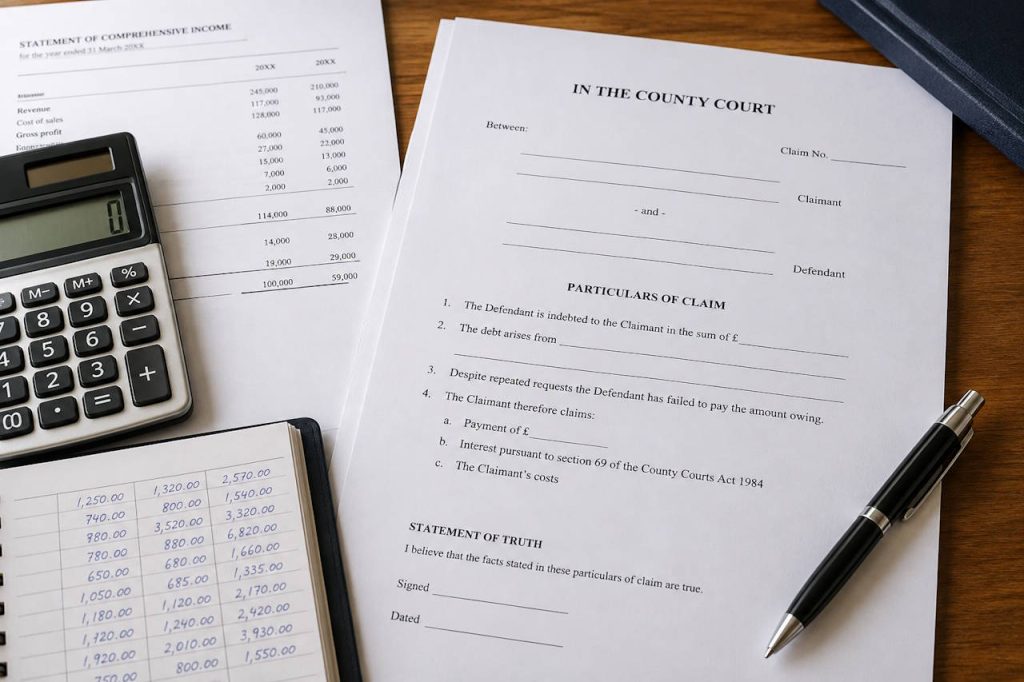
A County Court Judgment is a formal court decision stating that money is owed. If the judgment names your limited company, the debt will normally belong to the company rather than to you personally. This distinction matters because a limited company is a separate legal entity.
A company CCJ may set out:
- how much must be paid;
- when payment is due;
- whether payment can be made by instalments;
- who must receive the money.
The judgment may also affect the company’s ability to obtain credit, open accounts with suppliers or secure new contracts.
A CCJ or High Court judgment normally remains on the Register of Judgments, Orders and Fines for six years. If it is paid in full within one month, it can be removed from the register. If it is paid after one month, it can usually be marked as satisfied but will remain visible for the rest of the six-year period. The government’s guidance on CCJs and credit records explains how this works.
The circumstances leading to judgment can vary. Understanding the CCJ process can help you identify whether there was an earlier claim, whether documents were sent to the correct address and whether there may be grounds to challenge the decision.
Check Your Options After a Company CCJ
Leave us your details in the form below and we’ll get back to you as soon as possible. We’ll help you understand whether payment, negotiation, liquidation or another route may need to be considered. Our initial consultations are free and our advice is confidential.
What Should You Do After Receiving the CCJ?
Do not ignore the judgment, even if you are already planning to close the company. Taking action early may give you more control over what happens next.
1. Check who the judgment is against
Confirm whether the judgment names:
- the limited company;
- you as an individual;
- both you and the company;
- a business operated by you as a sole trader.
A debt against a limited company is treated differently from a personal judgment.
2. Check the amount and payment terms
Review the judgment carefully. Confirm how much is due and whether payment is required immediately or by instalments. You should also compare the amount with your records. Check invoices, contracts, previous correspondence and any payments that have already been made.
3. Consider whether the judgment is correct
There may be grounds to ask the court to set aside or vary a judgment in some circumstances. For example, you may not have received the original claim or the debt may already have been paid. This is a legal process, so appropriate legal advice may be needed.
4. Review the company’s wider financial position
A CCJ is rarely the only issue facing a distressed company. Check whether the business can pay:
- HMRC liabilities;
- rent and utilities;
- employee wages;
- finance agreements;
- suppliers;
- loans and overdrafts;
- other overdue invoices.
Government guidance says a company has 14 days to respond to a court judgment. The available responses can include paying the debt, reaching an agreement, challenging the judgment, entering administration or applying to wind up the company voluntarily. If the company cannot meet its debts as they fall due, speak to a licensed insolvency practitioner promptly.

Can You Strike Off a Company With an Unpaid CCJ?
Applying to strike off a company does not cancel its debts. Strike-off is generally intended for companies that are no longer trading and whose affairs have been brought to an orderly conclusion. It is not a formal insolvency procedure and does not provide a structured way to deal with unpaid creditors.
You may be able to submit an application to strike off your company if it meets the relevant conditions. However, submitting the application does not guarantee that the company will be dissolved. Companies House publishes a notice in The Gazette before removing a company from the register. This gives creditors and other interested parties an opportunity to object.
A creditor with an unpaid CCJ is likely to have clear evidence that money remains due. They can raise an objection and ask Companies House to suspend the strike-off process while they pursue the debt. Companies House confirms that interested parties can object to prevent a company from being removed while outstanding debts are being pursued. Trying to strike off a company with an unpaid judgment may therefore delay matters rather than resolve them.
It is also important to give accurate information during the application process. Directors should not present strike-off as a way to avoid paying creditors.
Thinking about strike-off after a CCJ?
An unpaid judgment can lead to an objection, leaving the company open while the creditor continues pursuing the debt. Check the company’s position before submitting an application.
What Can the Creditor Do Next?
A creditor may take further steps if the CCJ is not paid. The action they choose will depend on the amount owed, the company’s assets and the information they have about its finances.
Possible enforcement options include:
- instructing enforcement agents;
- seeking control over company goods;
- applying for a third-party debt order;
- seeking a charging order over relevant property;
- applying for an order to obtain information;
- taking steps towards a winding-up petition.
The terms “bailiff” and “enforcement agent” are often used interchangeably, although their legal powers and the process they follow can depend on the type of debt and court order. Our guidance on bailiffs and enforcement officers explains what may happen when a creditor begins enforcement.
If a company does not respond to a court judgment within 14 days, creditors may apply to have assets seized by a bailiff or sheriff. You should not sell, transfer or hide company assets to keep them away from a creditor. Transactions carried out when a company is insolvent may later be reviewed by a liquidator.
Can a Company Enter Liquidation After a CCJ?
A CCJ does not prevent an insolvent company from entering voluntary liquidation. If the business cannot pay the judgment or its other debts, a Creditors’ Voluntary Liquidation may be appropriate.
A CVL is a formal process used to close an insolvent limited company. The directors begin the process, but a licensed insolvency practitioner must be appointed to act as liquidator. The liquidator will normally:
- take control of the company’s affairs;
- identify and value its assets;
- communicate with creditors;
- investigate the company’s financial history;
- realise available assets;
- distribute available funds according to insolvency law;
- complete the closure of the company.
The creditor that obtained the CCJ will generally be able to submit a claim in the liquidation. It will then be dealt with alongside the company’s other creditors according to the statutory order of priority. The outcome may be affected if the creditor has already completed enforcement action or obtained security over an asset. This is one reason why early advice matters.
Our guide to company debts during liquidation explains how different liabilities are treated once the company enters the process.

Is Liquidation Better Than Waiting for the Creditor?
Liquidation is not automatically the right answer whenever a company receives a CCJ. If the business remains viable and can pay its liabilities, a payment arrangement or another solution may be more appropriate. The company may also need legal advice if the judgment is disputed.
However, waiting without a plan can reduce your options. Enforcement may add costs and place further pressure on company cash flow. A creditor may also escalate matters by presenting a winding-up petition.
Starting a CVL can give directors more control over the timing of the closure. It also places the company’s affairs into the hands of a regulated professional.
At Anderson Brookes, we assess the whole financial position before recommending a route. We will consider whether the business can be rescued, whether an agreement may be realistic or whether liquidation is the more appropriate way to deal with the debts.

Does a Company CCJ Make You Personally Liable?
A CCJ does not automatically result in personal liability. A limited company is usually responsible for its own debts. This means that a CCJ entered against the company does not normally become your personal debt simply because you are a director.
Personal liability may, however, arise in certain circumstances, including where:
- you signed a personal guarantee;
- the judgment names you personally;
- you traded as a sole trader rather than through a limited company;
- company money or assets were used improperly;
- you continued trading in a way that worsened creditor losses;
- fraud, misrepresentation or a breach of duty is established.
Do not assume that personal liability exists simply because the creditor is contacting you as the director. Equally, do not assume that the limited company structure protects every action you take after insolvency becomes apparent.
Worried the company’s CCJ could affect you personally?
A CCJ against a limited company does not normally become your personal debt. However, personal guarantees, director conduct and other circumstances can change the position. If you are unsure where you stand, Anderson Brookes can review the company’s financial position and explain the options available to you.
Frequently Asked Questions
Does a CCJ disappear when a company closes?
No. Applying to close a company does not automatically erase a CCJ. A creditor may object to strike-off if the judgment remains unpaid. If the company enters liquidation, the CCJ debt will usually be included among its liabilities.
Can a creditor stop my company being struck off?
Yes. A creditor can object after the proposed strike-off is advertised in The Gazette. If Companies House accepts the objection, dissolution will normally be suspended while the debt or dispute remains unresolved.
Can bailiffs visit after a company CCJ?
A creditor may apply for enforcement if the judgment is not paid. Whether enforcement agents can visit, which goods they can take and what notice must be given will depend on the circumstances. Seek advice promptly rather than waiting for an enforcement visit.
Can I pay the CCJ and then close the company?
Potentially, yes. Paying the CCJ may resolve that particular debt, but you must still consider every other liability. Strike-off may only be suitable if the company can settle its affairs and meets the necessary conditions.
Can I start another company after closing one with a CCJ?
A company CCJ does not usually prevent you from becoming a director of another business. However, there may be restrictions if you have been disqualified. You must also take care when transferring assets or reusing the name of an insolvent company.
How do I know whether the CCJ is against me or the company?
Check the exact name shown on the judgment. A judgment against “Example Limited” will normally be a company liability. A judgment naming you personally may be enforceable against your own income or assets. If the wording is unclear, obtain legal advice before making any payment or closure decision.
What if I am a sole trader?
The position is different if you operate as a sole trader. A sole trader and their business are not separate legal entities. Business debts are therefore personal debts. Stopping work or closing the business does not remove liability for a personal CCJ. The creditor may continue to pursue you even after the business has ceased trading.
Personal debt solutions are different from limited company insolvency procedures. The available options will depend on your income, assets, total debts and personal circumstances.
Worried About Closing a Company After a CCJ?
You don’t have to work through the options alone. Anderson Brookes can review your company’s debts, explain whether liquidation or another route may be appropriate and help you understand what to do before enforcement progresses.
Our advice is confidential, calm and based on your actual circumstances. We will explain the available options clearly, without pressure or judgement.
Call Anderson Brookes on 0800 1804 935 to speak to our team and arrange a consultation with a licensed insolvency practitioner.